

Two moments a day when you cannot see them. We built one thing for each.
The car, where a quiet baby behind you is out of sight for the length of a drive. The cot, where the longest stretch of the day passes with nobody looking. Neither is about danger. Both are about distance, and about closing it faster than a person can on their own.
The car, where a quiet baby behind you is out of sight for the length of a drive. The cot, where the longest stretch of the day passes with nobody looking. Neither is about danger. Both are about distance, and about closing it faster than a person can on their own.
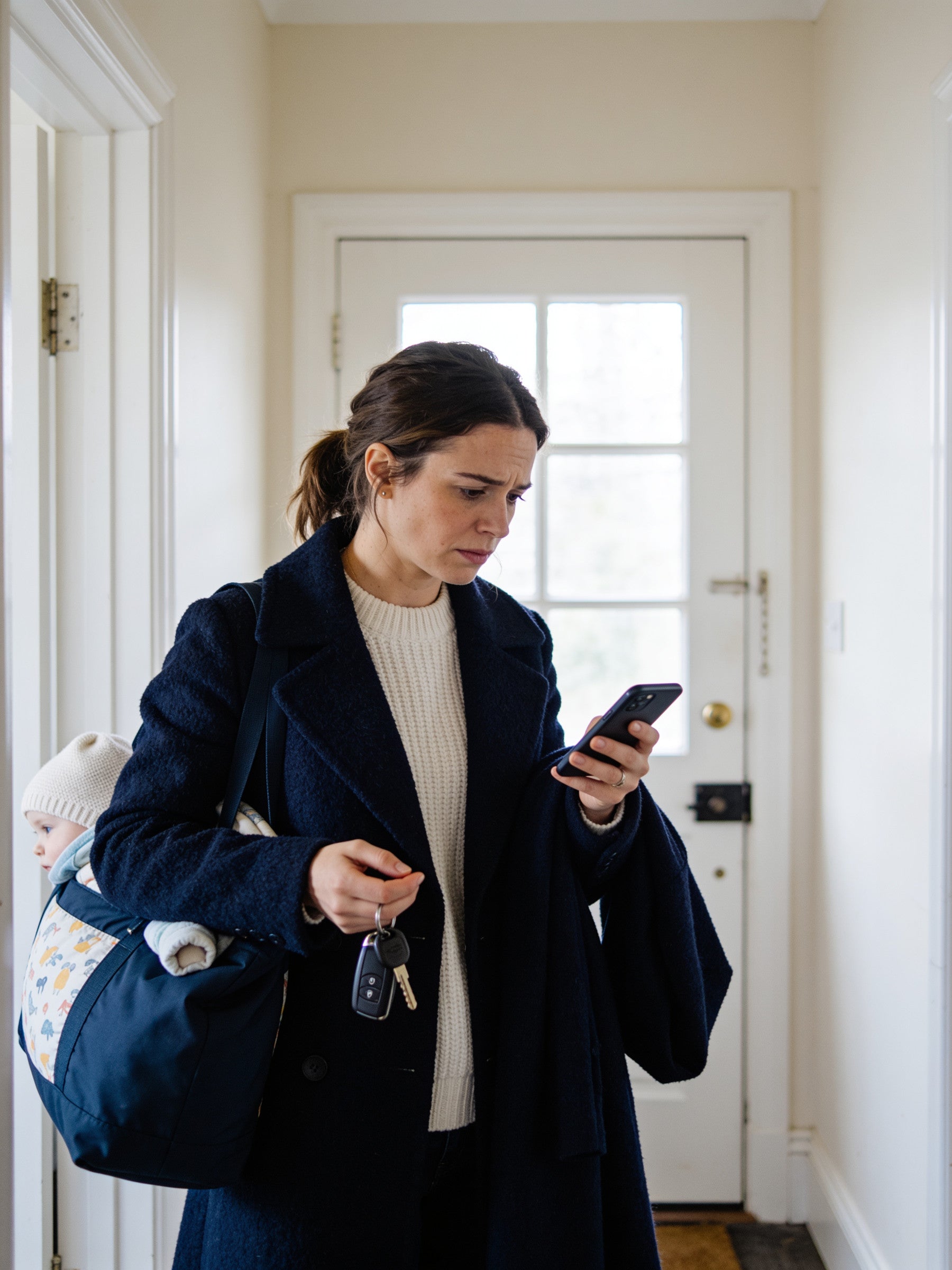
It is not about love. It is about routine.
Two memory systems run in every healthy brain. One holds intentions: the baby is in the back, I am stopping at nursery. The other runs practised routines on its own: the commute. They compete, and a practised route can complete itself while the intention waits to be interrupted.
Sleep loss, stress and a change of routine are exactly the conditions that break that interruption. New parenthood supplies all three at once, for months. A tired parent is not careless. They are momentarily absent, and then present again.
- 62 min
of sleep lost per night by mothers in the first three months. Neither parent gets back to pre-pregnancy sleep within six years.
Richter et al., Sleep, 2019. 2,541 women and 2,118 men. - Three at once
Sleep loss, stress and a changed routine, all supplied by new parenthood, for months.
- Not careless
Momentarily absent, then present again. That is the gap the Seat is built for.

A parked car is a ten-minute problem.
The cabin gains about 11 °C in its first ten minutes and most of its heat within half an hour, on a mild day as much as a hot one. Cracking a window makes almost no difference.
The cabin rises fastest at the start, on a mild day as much as a hot one.
McLaren, Null and Quinn, Pediatrics, 2005Most of the rise happens within half an hour. A cracked window makes no meaningful difference.
McLaren, Null and Quinn, Pediatrics, 2005A baby’s temperature climbs three to five times faster: more skin for their size, less body to soak up heat, and a cooling system still being built. So there is no safe wait.
NHTSAThe cabin gains about 11 °C in its first ten minutes and most of its heat within half an hour, on a mild day as much as a hot one. Cracking a window makes almost no difference.
Some cars remind you to check. None of them know.
Most built-in reminders work on door logic: the rear door opened before the journey, so a message appears when you switch off. They do not sense a child.
Two names. Each says what it does.
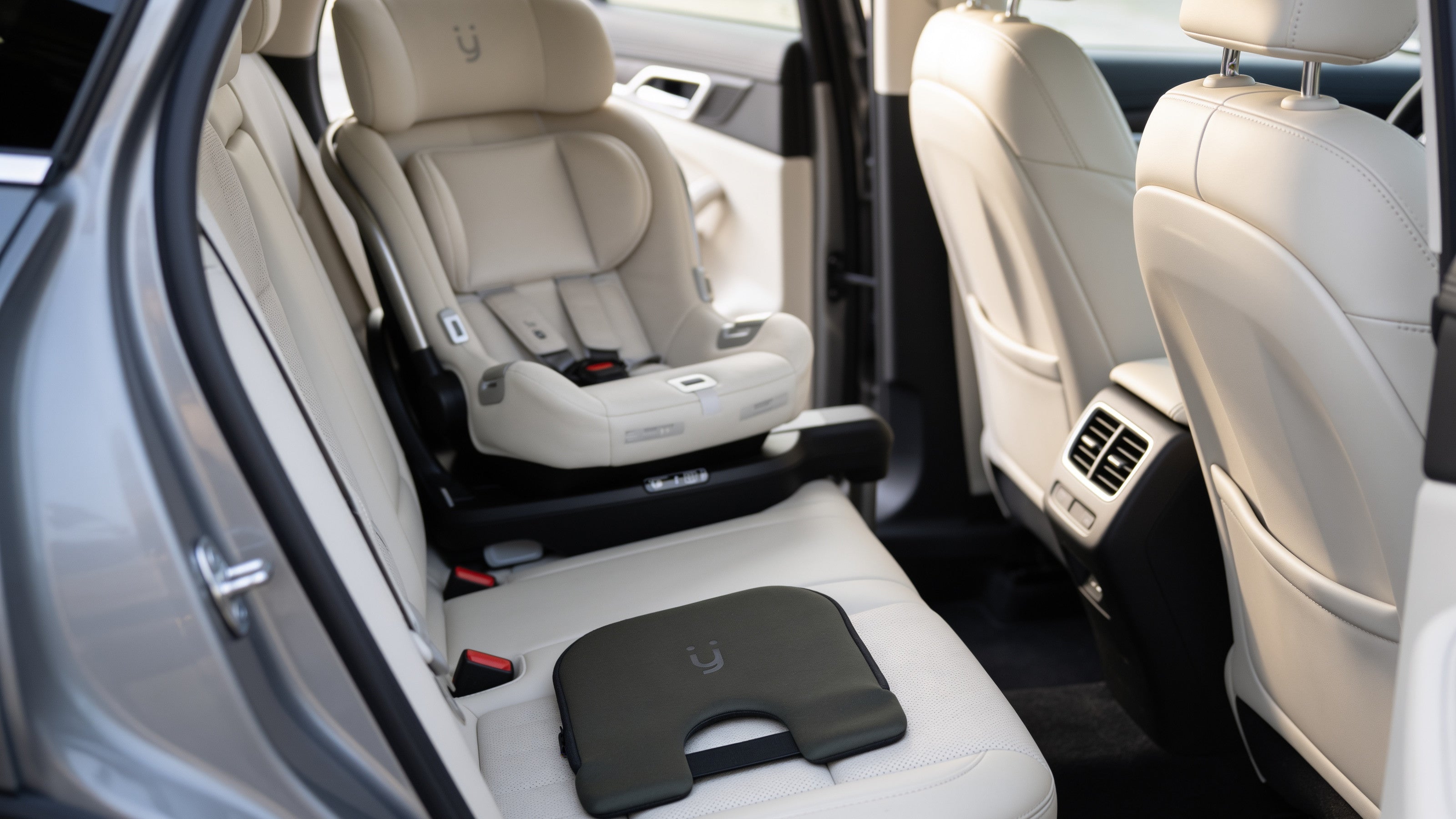
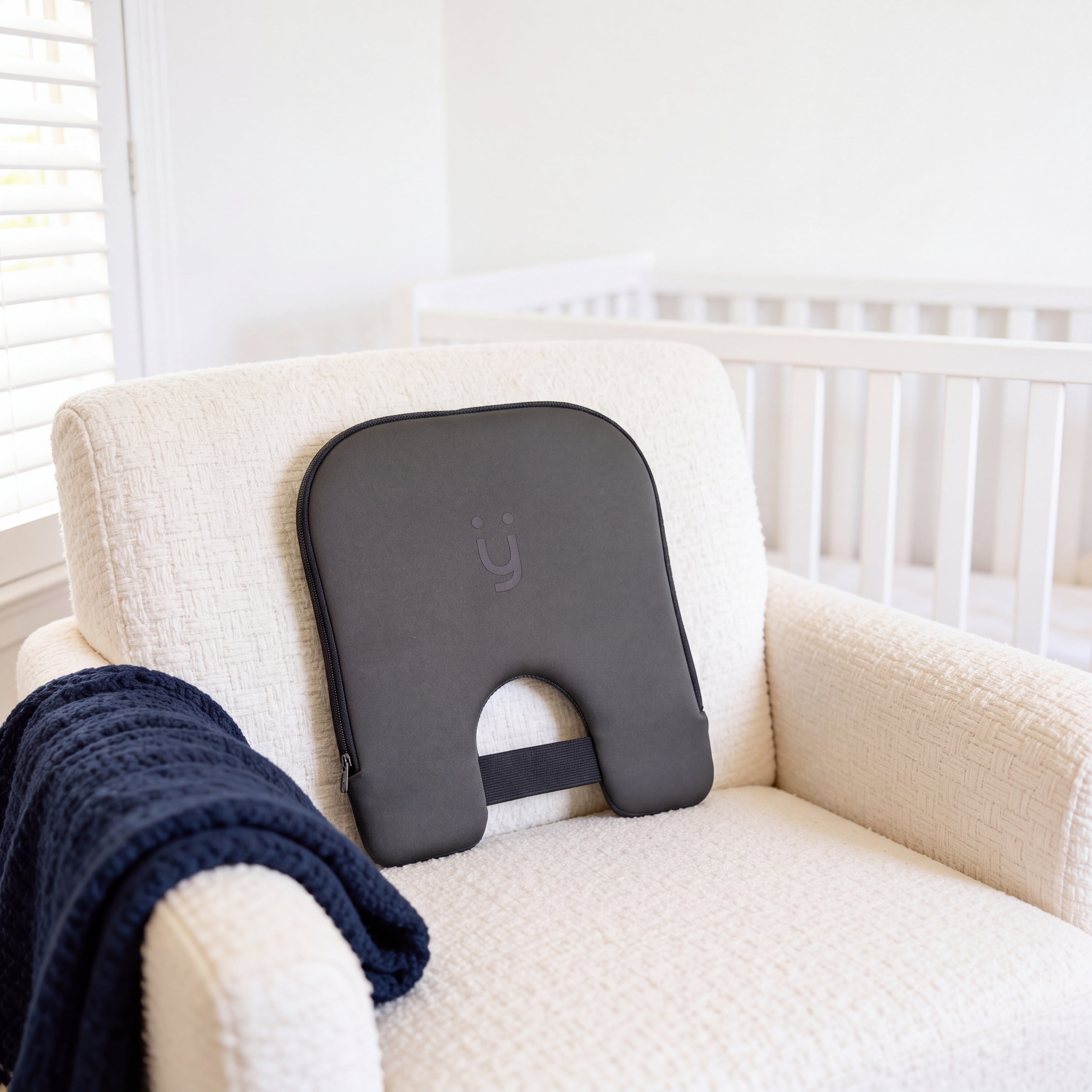
A thin cushion on the seat pad senses whether anyone is sitting on it. It knows the seat is occupied without anything to switch on.
Your phone first, and it keeps going until you are back in range. Not back within minutes, and the people you chose get the car’s location. Whoever is closest gets there.
An alarm is a noise in an empty car. A relay keeps going until it reaches a person.
Occupied, and you and your phone have gone out of range. At once.
Sounds, vibrates and lights up, even on silent, and keeps going until you are back.
Not back within minutes, and they get the car’s location. Up to ten of them, and the closest one gets there.
Range is about 15 metres between the cushion and your phone or key fob. GPS location comes from your phone.
It gets a person back to the car. That is the whole claim.
- It does not prevent anything. No device can. It notices, and it tells people.
- It does not replace you, or a look in the back before you lock the door.
- It will sometimes be wrong. A sensor is a sensor, and a false alert is the price of not missing a real one.
- It will not frighten you into buying. We would rather you knew exactly how it works.
Babi Seat is an accessory that lies on the seat pad of your child’s car seat. It does not change how the seat is fitted or used, and it is not a child restraint.
Where our numbers come from
- Norman, Psychological Review, 1981. Poldrack and Packard, Neuropsychologia, 2003. The capture error and competing memory systems.
- Richter et al., Sleep, 2019. Sleep after a first birth, 2,541 women and 2,118 men.
- Lim and Dinges, Psychological Bulletin, 2010. Seventy studies, 1,533 participants: sleep loss affects attentional lapses more than any other measure.
- McLaren, Null and Quinn, Pediatrics, 2005. The heating curve, and the cracked-window test.
- NHTSA. A child’s body temperature rises three to five times faster than an adult’s.
- Prasad and Snyder, NHTSA, DOT HS 813 669, December 2024. Built-in rear seat reminders tested across twelve vehicles.
- There is no UK dataset on children left in hot cars. We do not use figures from other countries in its place.
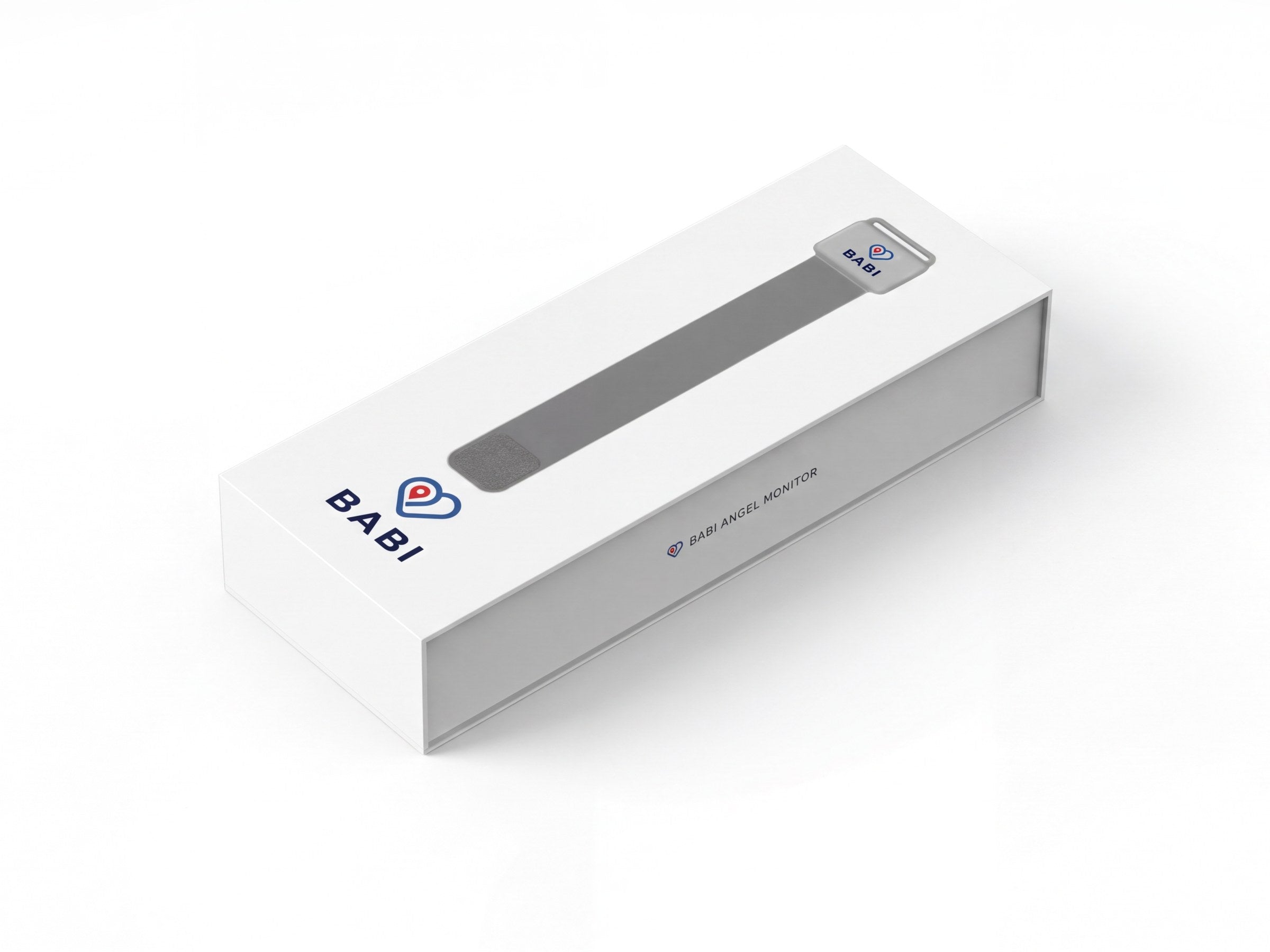
The other moment. The cot. Babi Angel™.
A soft band that shows you your baby’s temperature, oxygen level and heart rate through the night, so you can look in without opening the door.
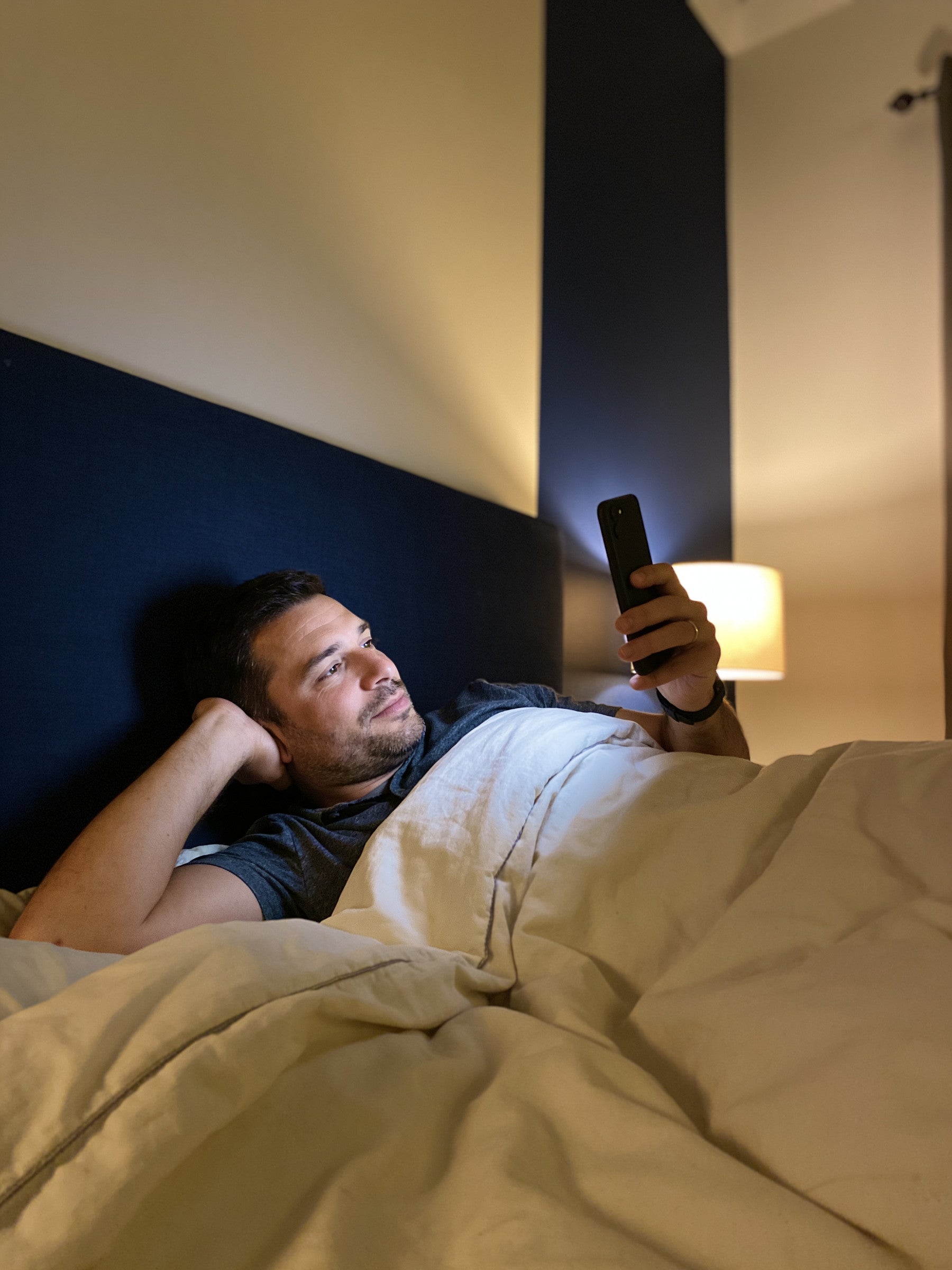
Eleven hours, another room, and you asleep too.
Sleep is the longest stretch of every day in which nobody is looking, and it is when a baby signals least. Muscle tone is lowest, arousal is blunted, and a parent in the next room has the least to go on.
So parents get up. Again and again, waking the baby half the time. That is the problem Angel is for. Not fear. The stairs.
- Three readings
Temperature, oxygen level and heart rate: the three readings no parent can take by looking in.
- Two phones
Paired to two phones, so whoever is awake can check.
- A glance
Most nights you will glance at it and go back to sleep. That is what it is for.

Three readings. Why each one matters.
Each is something you cannot see from the doorway. Angel shows you the number and the trend. Reading it is yours, and if you are ever worried the answer is a doctor, not an app.
The one already in safer-sleep advice. Babies drift with the room rather than holding steady, so too warm is a known thing to avoid. In the first months a fever, or a low reading, is worth a call rather than a wait.
The one no eye can see. A baby’s oxygen reserve is small and used about twice as fast for their size as yours, so a change shows in the reading long before it shows in the room.
The one that confirms the others. Rarely useful alone, valuable alongside. It rises with fever and distress, and it helps tell a real change from a band that has slipped.
Angel does not diagnose, treat or prevent any condition. It shows you readings within the accuracy stated, and nothing beyond them.
One name. It says what it does.
A soft band on the ankle tracks pulse rate, oxygen level and skin temperature and shows you what it finds in the BabiCare app, on up to two phones. If a reading moves outside the range you set, your phone tells you.
BabiTrack™ describes what the band tracks and what it sends. It does not describe what it prevents, because it does not prevent anything.

It does not decide anything. It gets a person to the room.
A reading moves outside the range you set. At once.
Vibrates, sounds and flashes, even on silent, so you can go and look. Pair the app on two phones and whoever is awake can check.
Not dismissed, and the other people you registered in the app are told, with a location, so it never rests on one pair of eyes.
Most nights you will glance at it and go back to sleep. That is what it is for.
It shows you. It does not tell you.
- It will not prevent anything. No monitor of any kind has ever been shown to prevent a sudden infant death, and we will not imply otherwise.
- It will not tell you your baby is well. It shows you numbers. Reading them is your job, and if you are ever worried, the answer is a doctor and not an app.
- It will not catch everything. It measures the three things above, within the accuracy stated. Movement, a slipped band and darker skin tones can all affect a reading.
- It will not replace you, or safer-sleep advice. When it tells you something, the point is that you go and look.
Babi Angel is not intended to diagnose, treat, cure or prevent any disease or condition, including Sudden Infant Death Syndrome. It is not a substitute for adult supervision or safer-sleep practice.
If you are here because you are frightened, we want to be straight with you.
This will not make your baby safer. What it will do is let you look without getting up. For some parents that is worth a great deal, and for others it makes the worry louder. Only you know which you are.
Where it earns its place is the ordinary night. A glance at the phone, and back to sleep.
Where our thinking comes from
- AAP Task Force, Pediatrics, 2022. Safer-sleep recommendations, including that home monitors are not a way to reduce risk.
- The Lullaby Trust. Safer-sleep guidance on room temperature and overheating.
- MHRA, decision on baby breathing and movement monitors, February 2021.
- FDA, cleared wording for infant pulse oximetry monitors: a notification to the caregiver, prompting them to assess the infant.
- Infant physiology summarised from standard paediatric references: more skin for their size, immature temperature control, a smaller oxygen reserve.
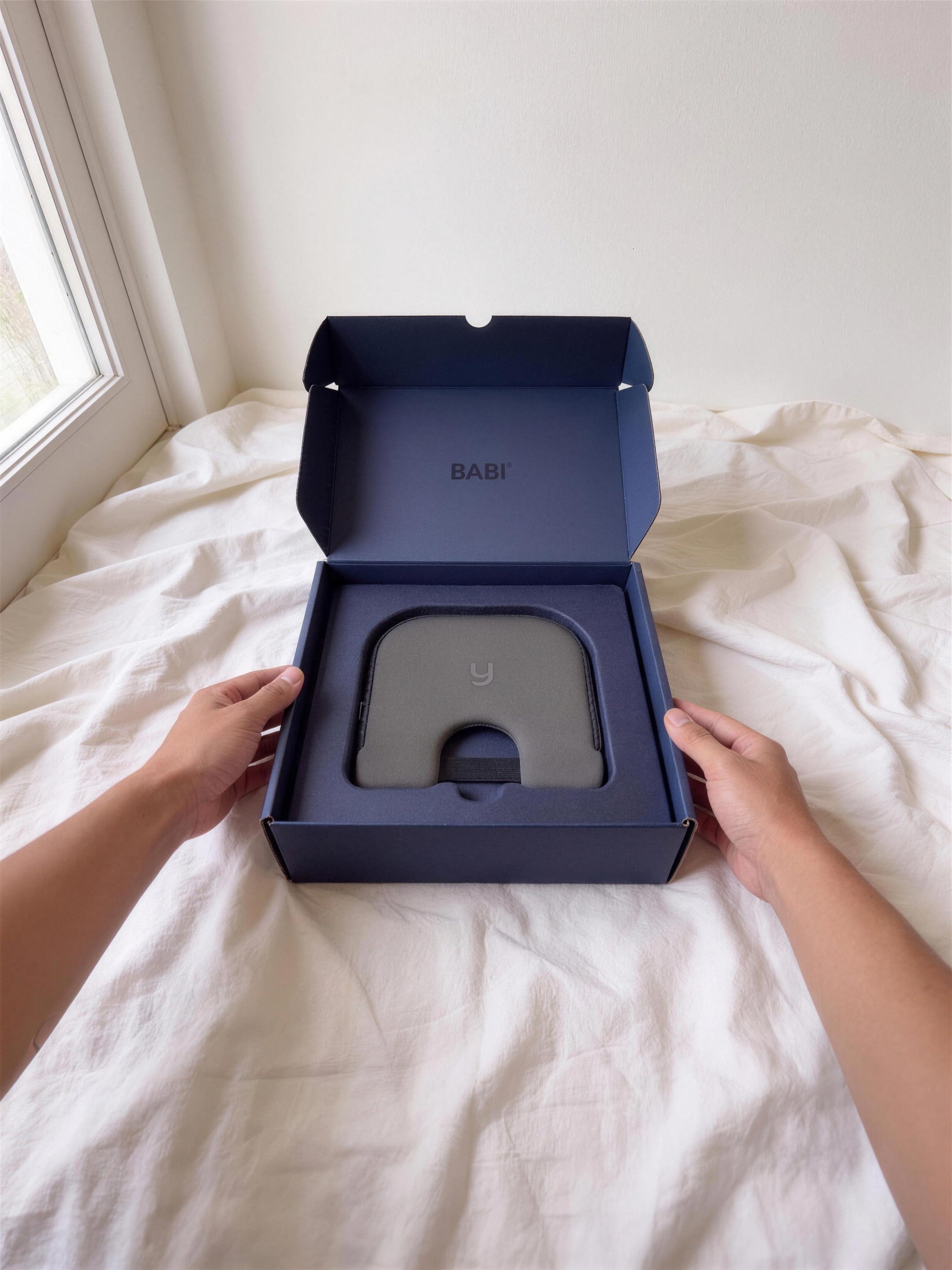
The other moment. The car. Babi Seat™.
A thin cushion on the child seat that knows when it is occupied, alerts your phone until you are back, and tells your family where the car is if you are not.




































































































































